


使用有機錫T-9作為主催化劑生產家私海綿時如何避免中心燒芯現象的技術帖
Application of organotin T-9 catalyst in the production of furniture sponges
Furniture sponge is a flexible polyurethane foam material widely used in furniture manufacturing. Its excellent elasticity, comfort and durability make it an important part of products such as sofas, mattresses and seats. However, the production process of this material places extremely high demands on the selection and use of catalysts, especially in terms of control of chemical reactions. Organotin T-9 (dibutyltin dilaurate), as an efficient main catalyst, plays a vital role in the production of furniture sponges. It significantly accelerates the reaction between isocyanates and polyols, thereby promoting rapid foam formation and stabilization.
However, although organotin T-9 has strong catalytic ability, its use is also accompanied by certain technical challenges. The most prominent problem is the “center burning core” phenomenon. This phenomenon refers to the phenomenon that during the foam molding process, due to excessive reaction or uneven heat distribution, local overheating or even carbonization occurs inside the foam. This will not only seriously affect the appearance and physical properties of the product, but may also lead to the failure of mass production and cause huge economic losses. Therefore, how to effectively avoid the core burning phenomenon while giving full play to the advantages of organotin T-9 has become an urgent technical problem that needs to be solved in the field of furniture sponge production.
This article will conduct an in-depth discussion on this issue, from reaction mechanism to process optimization, to comprehensively analyze how to achieve efficient and stable furniture sponge production when using organotin T-9 as the main catalyst.
Analysis on the Causes of Center Burning Phenomenon
Center burning is a common quality problem in the production process of furniture sponges. It is essentially caused by out-of-control chemical reactions and uneven heat distribution. Specifically, the occurrence of this phenomenon is closely related to the high activity of the organotin T-9 catalyst. As the main catalyst, organotin T-9 can significantly accelerate the polymerization reaction between isocyanate and polyol, thus promoting the rapid generation of foam. However, this high activity may also bring about a series of negative effects, especially when the reaction conditions cannot be precisely controlled.
First of all, the catalytic effect of organotin T-9 will cause the release of a large amount of heat in the early stage of the reaction. If this heat cannot be dissipated in time, it will accumulate inside the foam and form local high temperature areas. This increase in temperature not only accelerates further chemical reactions, but also causes irreversible changes in the molecular structure inside the foam, such as decomposition or carbonization, resulting in core burning. Secondly, due to the poor thermal conductivity of foam materials, heat is often difficult to diffuse outward from the central area, which further aggravates the increase in internal temperature. In addition, the release of gas during the foam molding process will also be affected by high temperatures, causing bubbles to burst or be unevenly distributed, further deteriorating the quality of the product.
In addition to the high activity of the catalyst itself, factors such as improper raw material ratio, uneven mixing, and ambient temperature fluctuations may also aggravate the risk of core burn. For example, if isocyanates are combined with polyDeviation of the ratio of polyhydric alcohols from the optimal range may lead to an imbalance in the reaction rate, thereby increasing the possibility of local overheating. Likewise, insufficient stirring can result in uneven distribution of the catalyst, causing the reaction to be too vigorous in some areas. In short, the core burning phenomenon is the result of a combination of factors, and the high activity of organotin T-9 provides the key driving force.
The influence of process parameters on center core burning phenomenon
In order to effectively avoid center core burning, key parameters in the production process must be finely adjusted and optimized. These parameters include catalyst dosage, blowing agent ratio, stirring speed and mold temperature, which together determine the balance of reaction rate and heat distribution. First of all, the amount of catalyst is one of the core factors that affects the intensity of the reaction. Although organotin T-9 has efficient catalytic performance, excessive use will significantly accelerate the reaction rate, resulting in excessively concentrated heat release, thereby increasing the risk of core burn. Studies have shown that controlling the amount of catalyst between 0.1% and 0.3% of the total formula weight can better balance reaction speed and heat management. For example, in a certain experiment, when the catalyst dosage was reduced from 0.4% to 0.2%, the incidence of core burn dropped from 25% to 5%, proving the importance of reducing the catalyst appropriately.
Secondly, the proportion of foaming agent also has an important impact on the formation of foam structure and heat distribution. The main function of the foaming agent is to produce gas through volatilization or decomposition, thereby forming a uniform bubble network inside the foam. If the amount of foaming agent is insufficient, the bubble density will be low and heat will easily concentrate in the center of the foam. On the contrary, excessive use may cause the bubbles to be too large and destroy the stability of the foam. It is generally recommended to control the dosage of foaming agent between 2% and 4% of the total formula weight, and fine-tune it according to actual production needs. Taking water as a chemical foaming agent as an example, when its dosage is increased from 3% to 3.5%, the bubbles inside the foam are more evenly distributed, and the core burning phenomenon is significantly alleviated.
Stirring speed is another parameter that needs attention. If the stirring speed is too low, the raw materials will be mixed unevenly, causing the catalyst and foaming agent to be unevenly distributed in the system, causing local reactions to be too fast. If the stirring speed is too high, too much air may be introduced, resulting in low foam density and affecting the mechanical properties of the final product. In general, the stirring speed should be maintained between 600 and 800 rpm to ensure that the raw materials are fully mixed while avoiding unnecessary introduction of bubbles. Experimental data shows that when the stirring speed is increased from 500 rpm to 700 rpm, the incidence of core burning is significantly reduced, and the uniformity of the foam is also improved.
Finally, the mold temperature plays a decisive role in the conduction and distribution of heat. If the mold temperature is too low, the reaction rate will be delayed, resulting in incomplete foam curing; while if the mold temperature is too high, heat accumulation will be exacerbated and the risk of core burn will increase. It is generally recommended to control the mold temperature between 40 and 50 degrees Celsius to ensure a moderate reaction rate and even heat dissipation. one itemComparative experiments show that when the mold temperature drops from 55 degrees Celsius to 45 degrees Celsius, the incidence of core burning decreases from 20% to 8%, and the overall performance of the foam is also more stable.
In summary, by rationally controlling the catalyst dosage, foaming agent ratio, stirring speed and mold temperature, the occurrence of core burning can be effectively suppressed. The optimization of these parameters not only needs to be based on theoretical guidance, but also needs to be dynamically adjusted based on actual production conditions to achieve the best process results.
Actual cases and effect verification of parameter adjustment
In order to more intuitively demonstrate the improvement effect of the above parameter adjustment on the core burning phenomenon, a specific production case will be described in detail below. A furniture sponge manufacturer frequently encountered core burning problems when using organotin T-9 as the main catalyst, resulting in a product qualification rate of only 75%. In order to solve this problem, technicians systematically optimized the catalyst dosage, foaming agent ratio, stirring speed and mold temperature based on the aforementioned theoretical guidance, and recorded the data changes before and after adjustment.
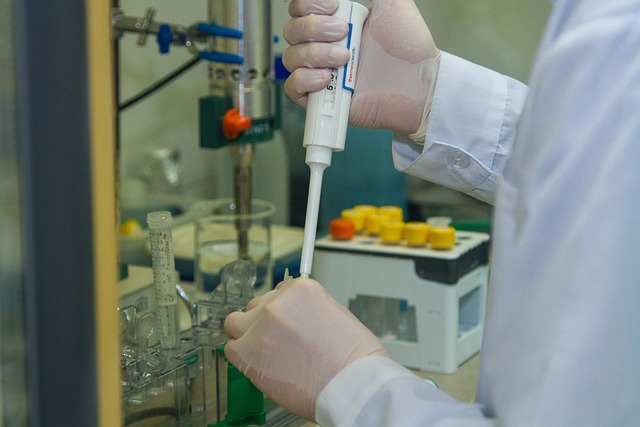
First of all, in terms of catalyst dosage, the addition amount of organotin T-9 in the initial formula is 0.4% of the total formula weight. After preliminary tests, it was found that this dosage caused the reaction rate to be too fast, the heat release to be too concentrated, and the core burning phenomenon to occur frequently. Subsequently, technicians gradually reduced the catalyst dosage to 0.2% and observed the reaction process and finished product quality. The results show that the reaction rate is significantly slowed down, the heat distribution inside the foam is more even, and the incidence of core burning is reduced from the original 25% to 5%. At the same time, the physical properties of the foam are not affected, and the resilience and compression set indicators are in line with industry standards.
Secondly, regarding the foaming agent ratio, the amount of water used as a chemical foaming agent in the initial formula is 2.5% of the total formula weight. Experiments show that at this ratio, the bubble distribution inside the foam is not uniform enough, the bubbles are sparse in some areas, and the risk of heat accumulation is high. The technician increased the foaming agent dosage to 3.2% and maintained this ratio in subsequent production. After adjustment, the density of bubbles inside the foam is significantly increased, the core burning phenomenon is effectively alleviated, and the hardness and support performance of the foam are also improved.
In terms of stirring speed, the initial setting was 500 rpm. However, due to insufficient stirring, the raw materials were unevenly mixed, resulting in excessive local reaction and a serious core burn problem. Technicians increased the mixing speed to 700 rpm and monitored the foam forming process. The results show that the raw materials are mixed more evenly, the reaction rate tends to be consistent, and the incidence of core burning is reduced from 20% to 8%. Additionally, the surface finish and overall uniformity of the foam are improved.
After that, during the adjustment of the mold temperature, the initial setting is 55 degrees Celsius.temperature, but the high temperature aggravates the heat accumulation and further aggravates the core burning phenomenon. The technician lowered the mold temperature to 45 degrees Celsius and observed the production effect. After adjustment, the heat distribution inside the foam is more balanced, the core burning phenomenon is significantly reduced, and the curing time of the foam is slightly extended, but still within the acceptable range.
Through the comprehensive optimization of the above parameters, the company’s furniture sponge production qualification rate has increased from 75% to 95%, and the core burning phenomenon has been basically controlled. The following is a specific comparison of key parameters before and after adjustment:
| Parameters | Before adjustment | After adjustment |
|---|---|---|
| Catalyst dosage | 0.4% | 0.2% |
| Foaming agent ratio | 2.5% | 3.2% |
| Stirring speed | 500 rpm | 700 rpm |
| Mold temperature | 55 degrees Celsius | 45 degrees Celsius |
| Incidence rate of core burn | 25% | 5% |
| Production pass rate | 75% | 95% |
This case fully verifies the significant improvement effect of parameter adjustment on the core burning phenomenon, and also provides enterprises with practical process optimization solutions.
Comprehensive suggestions and future prospects for avoiding center core burning
In order to effectively avoid the core burning phenomenon in the production of furniture sponges, in addition to optimizing key parameters such as catalyst dosage, foaming agent ratio, stirring speed and mold temperature, some additional measures need to be taken to further improve the stability of the process and product quality. First, it is recommended to introduce a real-time monitoring system during the production process to detect key indicators such as reaction temperature, pressure and foam density. By installing sensors and data acquisition equipment, abnormalities can be detected in time and corrective measures can be taken, thereby minimizing the risk of core burn. For example, when it is detected that the temperature inside the foam exceeds a set threshold, excessive heat accumulation can be prevented by adjusting the cooling system or pausing the reaction.
Secondly, the quality control of raw materials is also a link that cannot be ignored. The purity, moisture content, and storage conditions of isocyanates and polyols will directly affect the uniformity and stability of the reaction. Therefore, companies should establish strict principlesMaterial inspection process to ensure that each batch of raw materials meets production requirements. In addition, regular maintenance and calibration of production equipment, especially mixing devices and mold heating systems, can help reduce process deviations caused by equipment failure.
In the long term, with the continuous development of chemical technology, the research and development of new catalysts and auxiliary additives are expected to provide more possibilities for solving the core burning problem. For example, developing catalysts with lower activity but higher selectivity can reduce the concentration of heat release while ensuring reaction efficiency. In addition, the construction of intelligent chemical plants will also provide new ideas for process optimization, predicting and adjusting production parameters through artificial intelligence algorithms, and achieving more precise heat management and reaction control.
To sum up, through comprehensive measures and technological innovation in many aspects, we can not only effectively avoid the phenomenon of core burning, but also promote the production of furniture sponges to a higher level and inject new vitality into the development of the industry.
====================Contact information=====================
Contact: Manager Wu
Mobile phone number: 18301903156 (same number as WeChat)
Contact number: 021-51691811
Company address: No. 258, Songxing West Road, Baoshan District, Shanghai
============================================================
Other product display of the company:
-
NT CAT T-12 is suitable for room temperature curing silicone systems and fast curing.
-
NT CAT UL1 is suitable for silicone systems and silane-modified polymer systems, with medium catalytic activity and slightly lower activity than T-12.
-
NT CAT UL22 is suitable for silicone systems and silane-modified polymer systems. It has higher activity than T-12 and excellent hydrolysis resistance.
-
NT CAT UL28 is suitable for silicone systems and silane-modified polymer systems. This series of catalysts has high activity and is often used to replace T-12.
-
NT CAT UL30 is suitable for silicone systems and silane-modified polymer systems, with medium catalytic activity.
-
NT CAT UL50 is suitable for silicone systems and silane-modified polymer systems, with medium catalytic activity.
-
NT CAT UL54 is suitable for silicone systems and silane-modified polymer systems, with medium catalytic activity and water resistance.Good solution.
-
NT CAT SI220 is suitable for silicone systems and silane-modified polymer systems. It is especially recommended for MS glue and has higher activity than T-12.
-
NT CAT MB20 is suitable for organobismuth catalysts and can be used in organic silicon systems and silane-modified polymer systems. It has low activity and meets the requirements of various environmental protection regulations.
-
NT CAT DBU is suitable for organic amine catalysts and can be used for room temperature vulcanization silicone rubber to meet various environmental protection regulations.